Academics
/https://siu.edu/search-results.php
Last Updated: May 05, 2026, 03:02 PM
Our Academics
Explore the Boundaries of Discovery and InnovationBegin here. If you want to tackle the world’s most pressing challenges, you need the kind of hands-on learning, interdisciplinary research, and commitment to scientific excellence we cultivate. We have particular strengths in environmental sustainability, molecular biology, data science, and agricultural innovation. All of our academic programs are designed to spark curiosity and to develop critical thinking and career-ready skills. Join a vibrant community where discovery meets purpose—and where your future begins.
Our Degree Programs
Bachelor's Programs
Agribusiness Economics
We teach sustainable and cost-effective ways to produce and distribute food, fiber, and fuels, being mindful of our agricultural resources and the people who need them.
Agricultural Systems and Education
We teach students technology in agriculture, biotechnology, power equipment, genetics, food engineering technology, and more.
Animal Science
We offer a range of life science studies and hands-on experience to prepare students for a rewarding career. Choose to specialize in livestock production, equine science, or pre-veterinary medicine.
Biological Sciences
This major includes specializations that prepare students for careers in Biology Education (secondary school teaching), Biomedical Science (including pre-health professions), and Ecology (interdisciplinary community and ecosystem studies).
Chemistry and Biochemistry
Chemistry and Biochemistry offer two degree options at the undergraduate level. If you intend to be a professional chemist or go on to graduate school, you should choose the Bachelor of Science degree. With this degree, you can receive American Chemical Society Certification. The Bachelor of Arts degree is designed primarily for students who wish to complete a major in chemistry but will specialize in areas related to it. Students complete a group of core courses, along with additional courses that will lead to a specialization in biochemistry, business, environmental, or forensic chemistry.
Crop, Soil and Environmental Management
Our students learn about the natural environment by exploring and engaging with it, eager to participate and get their hands dirty (sometimes quite literally).
Fermentation Sciences
The Fermentation Science program will initiate you into modern visages of this ancient practice, preparing you for a career in fields ranging from production and quality control for alcoholic beverages to fermented foods such as cheese, sauerkraut, and bread.
Forestry
Our top-ranked bachelor’s degree in forestry focuses on sustainable management of natural resources while working outdoors in nature with interesting people from all walks of life. By immersing yourself in the program, you will learn about forest ecosystems and gain expertise in managing public or private forests, all the while employing natural resource sciences for the protection, management, and sustainable use of terrestrial and aquatic ecosystems.
Geography and Environmental Resources
Students in Geography and Environmental Resources learn about the Earth’s environment with a focus on the dynamic relationships between nature and society. Our broadly trained faculty emphasize the principles of physical and social science in the context of environmental problem solving.
Geology
For those that want to study what’s shaped the world and have big aspirations for the planet, the Geology program offers a Bachelor of Science with a curriculum designed for those who intend to pursue careers as geologists or who plan to go on to study geology in graduate, or a Bachelor of Arts degree that's more flexible and lets you shape the world with your other areas of interest, such as law, engineering, biology, business, or teaching.
Horticulture
We have designed our Bachelor of Science program to prepare the next generation of horticulturalists to merge science and art. Whether immersed in the classroom, greenhouse, or field, our students gain expert instruction to use their skills in innovative and imaginative ways.
Microbiology
The Bachelor of Science degree in Microbiology, the ONLY program in Illinois, prepares students for careers in the medical, academic, industrial, pharmaceutical, and governmental sectors. With a low student-to-faculty ratio, microbiology majors at SIUC benefit from personal attention from faculty who are actively engaged in research and who bring the excitement of their work directly into the classroom. The Bachelor’s degree also provides excellent preparation for graduate or professional degree programs.
Physics
If you’re a student just starting out with an interest in Physics, we encourage you to get your feet wet in the field by trying a class and looking at our five undergraduate degree specializations in applied physics: general physics, astrophysics, biomedical physics, computational physics, and materials and nanophysics. A BS degrees in physics provide excellent opportunities for high-paying jobs with very low unemployment rates. (See American Institute of Physics research.) Members of the physics faculty are involved in a wide range of physics research projects, both theoretical and experimental, including low temperature physics, surface physics, materials physics, superconductivity, magnetism, synchrotron radiation, infrared spectroscopy, solid-state physics, quantum mechanics, quantum computation, computational physics, statistical mechanics, astronomy, and physics education.
Physiology
Physiology seeks to understand biological function spanning the range from molecular mechanisms to medical problems. The discipline of physiology is uniquely positioned among the biomedical sciences to span the gulf between exploring the most fundamental aspects of biology and the most practical and applied problems of human and animal health.
Plant Biology
The undergraduate program in Plant Biology offers a flexible curriculum with two degree options (Bachelor of Arts or Bachelor of Science) and the opportunity to specialize either degree in Ecology, Cellular and Molecular Physiology, or Systematics and Conservation Biology. Undergraduate students can become involved in a variety of research and/or work experiences to add practical training to their undergraduate education.
Zoology
The Zoology program offers Bachelor of Arts and Bachelor of Science degrees for students pursuing careers involving wild animals. The B.A. degree is for students with zoology-related interests in non-science careers such as environmental policy, law, law enforcement, photography, zoo keeping, journalism, etc. The B.S. degree is for students wishing to specialize in animal biology (preparation for graduate study in traditional zoology disciplines), environmental biology, fisheries biology, pre-veterinary science, and wildlife biology.
Master's Programs
Agribusiness Economics
We teach sustainable and cost-effective ways to produce and distribute food, fiber, and fuels, being mindful of our agricultural resources and the people who need them.
Agricultural Sciences
The School of Agricultural Sciences is where science and technology, business and farm management, education and production, public policy and public health, conservation, and resource management converge. Our students become leaders by learning from leaders. Truly a school that knows no bounds, our classrooms include 2,000 acres of University Farms featuring crop and animal production, an Equine Center and greenhouses; Research Centers; the vast resources of the Shawnee National Forest; and access to specialized farming including Southern Illinois’ wine and fruit country.
Animal Science
We offer a range of life science studies and hands-on experience to prepare students for a rewarding career. Choose to specialize in livestock production, equine science, or pre-veterinary medicine.
Biomedical Science
The Biomedical Science specialization is appropriate for students planning careers as chiropractors, dentists, medical doctors, optometrists, pharmacists, physical therapists, physician assistants, or podiatrists, or those planning to attend graduate school in a human-health discipline.
Chemistry
The Chemistry graduate programs can be generally classified into four areas of emphasis: Analytical, Biochemistry, Materials, Organic, and Physical though there is considerable overlap of faculty research interests among these areas. Our research work covers many areas of experimental and theoretical chemistry, spanning the traditional areas of chemistry. Many of our faculty have research programs with foci on the interdisciplinary areas of materials and bio-related research. Come see us for more details.
Forestry
Our graduate program in forestry offers students the opportunity to tailor their program to address their interests and career aspirations. Students can partake in research through assistantships or gain hands-on experience teaching in a classroom or laboratory setting. Our distinguished faculty serve as your mentors, advisors, and guides as you refine your academic pursuits and goals.
Geography and Environmental Resources
Geography and Environmental Resources is the study of how humans modify, impact, adapt to, monitor, and manage the natural environment they inhabit. Geographical approaches are central to solving some of the most pressing issues facing humanity, making graduate study in Geography and Environmental Resources a great pathway to a rewarding career.
Geology
Southern Illinois and adjacent areas offer a wide variety of geological conditions ideal for individual study and research. Opportunities also exist for graduate student research all over the world. Our graduate arts or science degree programs develop the student's competence in the basic fields of geology and provide for specialization dependent on student and faculty interest.
Microbiology
The Master of Science degree is offered through the Molecular Biology, Microbiology and Biochemistry graduate program (MBMB). With a diverse and experienced faculty spanning the Carbondale and Springfield campuses, the MBMB program offers a wide selection of course and research options to prepare you for a successful and rewarding career. Numerous career opportunities are available to the master’s degree recipient.
Molecular Biology, Microbiology & Biochemistry
The program is designed to offer advanced training in biochemistry, biophysics, bacteriology, genetics, immunology, microbial physiology, virology, mycology, molecular biology, cell biology, developmental biology, cancer biology and structural biology.
Molecular, Cellular & Systemic Physiology
The Department of Physiology offers advanced training in mammalian physiology, aging, cancer biology, cell physiology, molecular biology, molecular endocrinology, neuro-endocrinology, neurophysiology, neuropharmacology, reproductive biology, and reproductive endocrinology, metabolism and human anatomy.
Physics
Physics offers graduate work leading to the Masters of Science in Physics degree. The program is two years in length with a thesis requirement. SIUC Physics is a unique program in that it provides many research opportunities offering students a wide choice of specific areas of study. A low student to faculty ratio allows students to work closely with top notch faculty engaged in cutting edge research.
Plant Biology
Plant Life Biology confers a Master of Science in Plant Biology to graduate students who complete a course of study designed specifically for the student by their advisory committee and a thesis research project.
Plant, Soil, and Agricultural Systems
While earning a Master of Science in Plant, Soil, and Agricultural Systems, your curriculum will be focused yet flexible to ensure success for your specific career path. We are proud to provide a variety of options for the numerous rewarding careers available to you upon graduation.
Zoology
Zoology's Master of Science program emphasizes research training and advanced coursework in ecology and ecosystem studies, environmental toxicology, genetics, evolution, population biology, fisheries, aquaculture, and wildlife ecology and management.
Doctoral Programs
Agricultural Sciences
Come immerse yourself in a quality, interdisciplinary, research program that focuses on critical issues of interest to you in agricultural sciences and related fields.
Chemistry
Research by our faculty members enjoys external support from a variety of agencies such as the National Science Foundation, the National Institutes of Health, the Department of Energy, NASA, the American Cancer Society, and the Dreyfus Foundation. Our work covers experimental and theoretical research in Analytical, Biochemistry, Materials, Organic, and Physical chemistry. Many of our research programs focus on interdisciplinary areas of materials and bio-related research. We welcome you to come see what we have to offer.
Environmental Resources and Policy
Our courses and other experiences prepare students to work on complex environmental problems and carry out interdisciplinary scientific research. This enables our graduates to address the most daunting challenges in natural resources and the environmental—identifying and solving problems that cross disciplinary boundaries.
Geology
We have two doctoral programs: Geosciences and Environmental Resources & Policy. Geosciences' primary goal is to develop a student capable of successfully conducting original research and the presentation of an acceptable dissertation describing the results, analysis, and implications of that research. Environmental Resources and Policy provides advanced inter-disciplinary training and research on physical, biological, and social processes responsible for natural resource and environmental problems facing contemporary society.
Microbiology
The Doctor of Philosophy (Ph.D.) degree is offered through the Molecular Biology, Microbiology and Biochemistry graduate program (MBMB). With a diverse and experienced faculty spanning the Carbondale and Springfield campuses, the MBMB program offers a wide selection of course and research options to prepare you for a successful and rewarding career.
Physics
The Department of Physics offers graduate work leading to the Ph.D. in applied physics. This unique program provides many research opportunities within the department, offering students a wide choice of specific areas of study. A low student-to-faculty ratio allows students to work closely with top notch faculty engaged in cutting edge research.
Plant Biology
The Department of Plant Biology offers a doctoral program that confers a Ph.D. in Plant Biology to graduate students who complete a course of study designed specifically for the student by their advisory committee and a dissertation research project that is accepted by the Department. Students have the opportunity to concentrate their doctoral program in ecology.
Zoology
The Zoology Department’s Master of Science program emphasizes research training and advanced coursework in ecology and ecosystem studies, environmental toxicology, evolutionary genetics and population biology, fisheries and aquatic conservation, or wildlife ecology and management.
Minors
- Agribusiness Economics
- Agricultural Education
- Agricultural Systems
- Ancient Practices
- Animal Science
- Biological Sciences
- Cannabis Production Systems
- Chemistry
- Crop Breeding, Genetics and Biotechnology
- Crop, Soil and Environmental Management
- Equine Studies
- Environmental Studies
- Food and Process Engineering Technology
- Forensic Science
- Geography and Environmental Resources
- Geology
- GIS
- Horticulture
- Microbiology
- Physics
- Physiology
- Plant Biology
- Plant Biology-Plant Biodiversity
- Plant Biology-Plant Ecology
- Plant Biology-Plant Biotechnology
- Sustainability
- Zoology
Certificates
Non-degree diploma
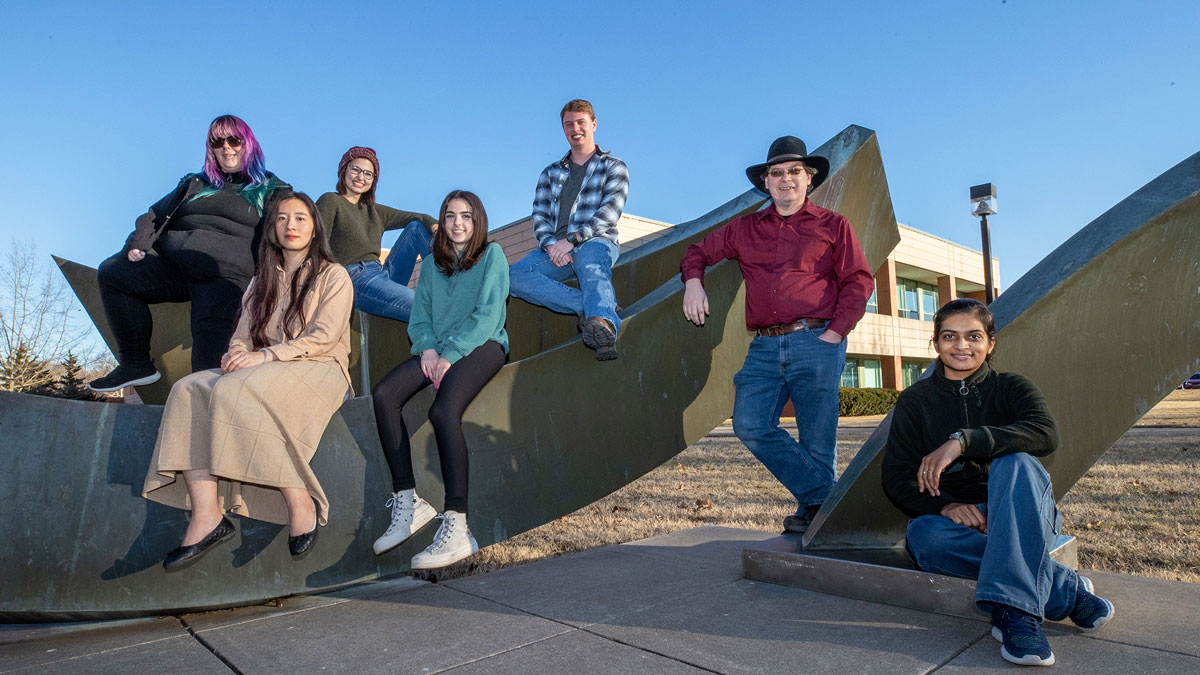
Growing crops in off-Earth environments
A student research team is using microalgae to grow crops in regolith, a surface mimicking conditions on the moon. They are finalists in the US Department of Energy’s AlgaePrize, which seeks to grow crops in off-Earth environments.